


Dear Friends,
Today I told my son Truman that King John of England is his 22nd great-grandfather. Therefore, Truman and I are also descended from John’s son, King Henry III and his son, King Edward I, though those last two did not warrant plays by Shakespeare.
I once discovered that, unlike myself, most people were not required to memorize the year of the signing of the Magna Carta by King John. Some lessons that I learned from David Kerrigan in 9th grade history class have stuck with me forever. Sometimes these lessons only contain a private importance, whereas sometimes history’s inclination to repeat itself (or to “rhyme,” as Mark Twain allegedly said), revives some long past conflict or lesson.
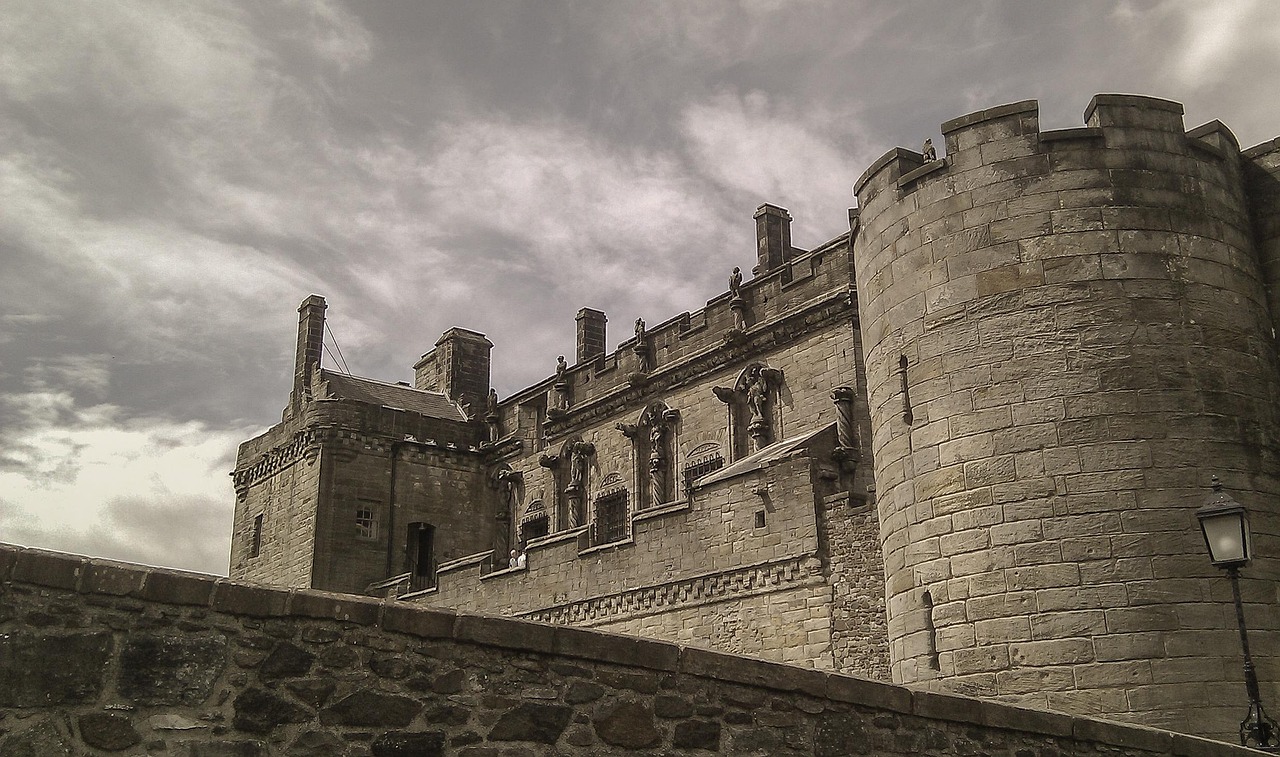
Speaking of conflicts, in the play The Life and Death of King John, Shakespeare explores John’s wars first with the French and then with the Pope. The lives of his direct descendants Henry III and Edward I offered fewer political conflicts and court intrigues to dramatize, so Shakespeare did not portray them on stage.
In his essay “Shakespeare and the Doctrine of Monarchy in King John,” Philip D. Ortega examines how Shakespeare’s King John reflects and reinforces Elizabethan political doctrine, particularly the Tudor doctrine of monarchy, which discouraged any limits on royal authority, such as those implied by The Magna Carta.
New historicism co-founder and Shakespeare scholar Stephen Greenblatt has pointed that the play King John“conspicuously avoids the most famous aspect of the historical King John’s reign.” We think of The Magna Carta as a foundational document for constitutional democracy, and a precursor to our U.S. Constitution and Bill of Rights, but Shakespeare didn’t want to anger Queen Elizabeth I (my second cousin, twelve times removed), so he left it out.
He was likely right to do so. Responding to documents regarding the Shakespeare play Richard II (a play about the forced abdication of a British king), in 1601 Queen Elizabeth famously said, “I am Richard II, know ye not that?”
If we are to learn lessons about responses to autocratic political threats to entertainers, whether they be William Shakespeare or Stephen Colbert, we might consider the 2017 book On Tyranny by Timothy Snyder. Yale historian Snyder famously coined the term “anticipatory obedience” in the face of expected threats from tyrants.
Here are some sample lessons and quotations from On Tyranny: Twenty Lessons from the Twentieth Centuryby Timothy Snyder:
- Do not obey in advance.
“Most of the power of authoritarianism is freely given. Individuals offer themselves without being asked. A citizen who adapts in this way is teaching power what it can do.”
- Defend institutions.
“Institutions do not protect themselves. They fall one after the other unless each is defended from the beginning.”
- Believe in truth.
“To abandon facts is to abandon freedom. If nothing is true, then no one can criticize power, because there is no basis upon which to do so.”
- Stand out.
“Someone has to. It is easy to follow along. It can feel strange to do or say something different. But without that unease, there is no freedom.”
- Be calm when the unthinkable arrives.
“Modern tyranny is terror management. When some act of political violence occurs, the authoritarians exploit it.”
- Be reflective if you must be armed.
“If you carry a weapon in public service, God bless you and keep you. But know that evildoers in the past have used uniforms and guns to justify criminal acts.”
- Listen for dangerous words.
“Be alert to the use of words like ‘extremism’ and ‘terrorism.’ Be especially wary of any invocation of ‘emergency’ or ‘exception.’”
- Make eye contact and small talk.
“This is not just polite. It is part of being a citizen and a responsible member of society.”
- Practice corporeal politics.
“Power wants your body softening in your chair and your emotions dissipating on the screen. Get outside. Put your body in unfamiliar places with unfamiliar people.”
- Be a patriot.
“A patriot wants the nation to live up to its ideals, which means asking us to be our best selves.”
I appreciate historians, literary scholars, and playwrights who all seek to understand all the ways we have sought to express our humanity, especially the sort of kindnesses that resist cruelty and assert human dignity as they respond to the human condition.
That last Snyder quotation reminds me of what James Baldwin says in Notes on a Native Son (1955): “I love America more than any other country in the world and, exactly for this reason, I insist on the right to criticize her perpetually.”
As we approach the 250th anniversary of America, I will reflect on how our country got its start when we chose to live up to democratic ideals, and when we chose disobedience over obedience, anticipatory or otherwise.
Exciting news! I adapted on of my weekly newsletters, about walking the greenbelts of South Davis with my son Jukie while reflecting on Ralph Waldo Emerson and nature, and submitted it to The Sacramento Bee. It was published today! I invite you to check out “Learning from nature: The wild delight of slow walks through Davis with my son.”
Also exciting: My brother Oliver will be joining us for pub quiz tonight. Oliver and I know many of the same things, and he knows about ten times as much about film and television as I do, so I have been joking that I’ll have to ask questions tonight about obscure science topics and the metric system. Two of my kids will also join us for the fun tonight.
Occasional pub quiz participant Andy Fell shares some good news about UC Davis: “National Science Foundation Awards UC Davis $5 Million for Artificial Intelligence Hub.”
Happy mid-July to you! The weather will be cooler than we deserve this evening. I invite you to join me outside our favorite brewery tonight, perhaps in the shade, for a grand competition featuring 31 questions on a variety of topics you should know something about.
In addition to topics raised above and below, expect questions tonight on the following: American heroes, transportation alternatives, Japanese statistics, secondary video, Turkey, news anchors, fast cars, slow bicycles, European pioneers, drudgery, cartoonists, capitals, oily surgeons, commencement addresses, anticipatory craziness, American wars, King John of England, medals, velvety goodness, languages notably spoken at home, friendliness, gerrymandering, stars, pillars, straw, revolutionaries, nepotism, U.S. states, geography, current events, and Shakespeare.
For more Pub Quiz fun, please subscribe via Patreon at https://www.patreon.com/c/yourquizmaster.
Thanks to all the new players joining us at the live quizzes and to all the patrons who have been enjoying fresh Pub Quiz content. We have over 70 Patreon members now, including the new paid subscribers Esther, James, Damian, Jim, and Meebles! Thanks also to new subscribers Bill and Diane, Tamara, Megan, Michael, Janet, Jasmine, Joey, Carly, The X-Ennial Falcons, and The Nevergiveruppers! Every week I check the Patreon to see if there is someone new to thank. Maybe next week it will be you! I also thank The Original Vincibles, Summer Brains, Still Here for the Shakesbeer, The Outside Agitators, John Poirier’s team Quizimodo, Gena Harper, the conversationally entertaining dinner companions and bakers of marvelous and healthy treats, The Mavens, whose players or substitutes keep attending, despite their ambitious travel schedules and the cost of avocado. Thanks in particular to Ellen and to my paid subscribers on Substack. Thanks to everyone who supports the Pub Quiz on Patreon. I would love to add your name or that of your team to the list of pub quiz boosters. Also, I sometimes remember to add an extra hint on Patreon. I appreciate your backing this pub quiz project of mine!
I also want to recognize those who visit my Substack the most often, including Luna, Jean, Ron, Myrna, and Maria, to whom I send sustained compassion.
Best,
Dr. Andy
P.S. Here are three questions (purportedly about train travel) from last week’s quiz:
- Which of the following French painters was born in 1869, the same year that the transcontinental railroad’s final golden spike was driven by Leland Stanford: Georges Braque, Edgar Degas, or Henri Matisse?
- Operated by Amtrak, what is the name of the 168-mile passenger train route between San Jose, in the Bay Area, and Auburn, with a stop in Davis?
- Kingman, Arizona is home to the closest Amtrak train station to what vacation destination city of over 600,000 people?