
SUBSCRIBE to the Sudwerk Pub Quiz Newsletter:
(weekly on Wednesdays)


Dear Friends of the Pub Quiz,

When you have smart friends, you receive smart texts. Here is an example from Michael Bisch, Executive Director of the Yolo Food Bank:

“Good afternoon, Andy! I took a break from my normal Neanderthal existence yesterday by listening to a Hidden Brain podcast regarding complex contagion for leading social change. It left me thinking of a current Food Bank initiative, but also of you and your weekly radio program. What, if anything, do you know about complex contagion?”

I like how Michael tucked in the politically-current adjective “Neanderthal,” remembering to capitalize the extinct human sub-species to show full respect. Secondly, he referenced the show of a radio journalist, Shankar Vedantam, knowing that I am a big fan of journalism, NPR in particular, and intellectual authors who seek to understand human behavior (Daniel Pink is another favorite). Thirdly, Michael brought up contagion – something we are all concerned about, as we seek out vaccinations for ourselves and our family members – but framed it positively, referencing the 2007 article “Complex Contagion and the Weakness of Long Ties” by Damon Centola and Michael Macy.

In this article in American Journal of Sociology, Centola and Macy suggest that information and viruses are simple contagions, but that behaviors are complex contagions, and therefore are more difficult to spread. Faculty members know this from our ongoing quests to get students in our classes to read the syllabus.

This was my texted response to Michael: “One of my jobs on [the UC Davis] campus is to encourage innovative faculty use of instructional technology tools. I host a number of faculty forums in which I feature faculty who use widespread tools, such as our learning management system, in creative ways, and who make any effective use unusual tools, such as a tool that allows batch-grading of scanned paper exams. As you may be able to guess, the principle of complex contagion informs all this work, because we are hoping to change / improve faculty behaviors so that their students will benefit from proven approaches to teaching. We focus on faculty presentations, rather than staff presentations, because faculty will more likely adopt or adapt an approach that has been used by a peer, including peers in different academic disciplines.”

I followed up with this: “Have you read James Clear’s book ATOMIC HABITS? It is the best-selling book right now on adopting favorable habits or breaking unhelpful habits. This month at work I am leading a weekly book group reviewing the book and its applicability to our professional goals. Highly recommended.”

Michael Bisch responded this way: “No, I’ve not read ATOMIC HABITS. Yesterday was the first I ever heard of complex contagion. I immediately recognized we at the Food Bank needed to course correct on some critical initiatives. Even a Neanderthal can have an epiphany! 😁”

I told Michael that “Positive change is built on epiphanies.”

By the way, I am enjoying this “viewer mail” approach to writing newsletters that I am trying out this week. Bob Dunning, my favorite Davis Enterprise columnist, has been using this approach in his daily column for decades (a record-breaking five decades, in fact), and it certainly saves a lot of time from the point of view of the journalist. I welcome your emails, comments, and (inner circle) texts, loyal readers!

Anyway, speaking of epiphanies, I typically turn to literary classics when I am looking for wisdom, even about understanding behaviors. Keeping that in mind, consider this bit of dialogue from The Sun Also Rises that has led to what some people call “The Hemingway Law of Motion”:

“How did you go bankrupt?” Bill asked. 

“Two ways,” Mike said. “Gradually, then suddenly.”

We could all think of examples of what Hemingway is exploring here, such as with the rapid change in national attitudes about gay marriage, especially during the time period between 2004, when same-sex marriages became legal in Massachusetts, and 2015, when the U.S. Supreme Court struck down all same-sex marriage bans in the U.S. in deciding the case Obergefell v. Hodges. Consider also the nationwide soul-searching that came about after the May 25, 2020 death of George Floyd, a Minnesota citizen who, like many of us, had lost his job because of the Covid-19 pandemic that we are still experiencing every day. While we would like to believe that attitudes towards equality and civil rights had been moving in more humane directions for many years (or gradually), the death of Floyd (and of Breonna Taylor, and of many others) moved the country rapidly, with regard to our attitudes and our behaviors, or so we would hope. Many people finally came to understand that, as Dr. King says, “The time is always right to do what is right.”

This week, we commemorate the one-year anniversary of the death of Breonna Taylor, and the one-year anniversary of the shutdown of most American businesses and schools. Both Covid-19 and the widespread outrage about fatal police shootings of unarmed African-Americans came to us gradually, and then suddenly. 

As complex contagion theorists would predict, when it came to responding to the pandemic, it took a while for us all to change our behavior (complex contagion) when confronted with the bracing information about the virus (simple contagion). When it comes to civil rights and human rights in the United States, I look forward to seeing continued awareness and evolution when it comes to changes in behavior by our police, and by all of us, in the coming months and years. 

Meanwhile, all of us would advance the causes of compassion and equity by making a cash contribution to the Yolo Food Bank during this difficult and ongoing season of need. Thanks to Michael Bisch for all his work in our community, and for his contributions to this week’s newsletter.

And thanks to all of you who support these efforts by becoming sponsors on Patreon. New sponsors for March include Lori Raineri and Doug DeSalles, new friends and old who appreciate the efforts I invest every week in keeping you intrigued and entertained with fresh trivia. Thanks also to the regular sustaining sponsors, The Original Vincibles (the folks who receive a copy of almost every book mentioned in the newsletter), The Outside Agitators, Quizimodo, and Bono’s Pro Bono Oboe Bonobos. Please join us with a new or upgraded membership on Patreon to see your name or your team’s name in the newsletter every week.

Tonight’s Quiz will feature questions on issues raised above, as well as the following: muscles and fitness, birthdays and such, the qualities of mercy, research funding, extended stays, Democratic challengers, understanding sets, basketball, musical groupings, numbers of wings, the U.S. Supreme Court, brackish water, prominent conflicts, post-colonial commemorations, countries that start with R, droids, literary fires, Harvard’s School of Public Health, unkind anagram links, Mark Twain, flavors of the day, background checks, subtitles, diagrams, and Shakespeare.

Thanks. See you tonight, virtually, perhaps, and for sure next week, in print.

Dr. Andy

P.S. Here are three questions from last week’s Pub Quiz:

  1. Science. What H word is the greatest threat to chimpanzees in the wild?  
  1. Eye Color. A study released by the U.K.’s Centre for Advanced Facial Cosmetic and Plastic Surgery has determined that what former member of One Direction has the greenest eyes of any Hollywood A-Lister? 
  1. Current Events – Names in the News. What is the four-syllable name of the rover that recently landed on Mars? 

P.P.S. “Justice is conscience, not a personal conscience but the conscience of the whole of humanity. Those who clearly recognize the voice of their own conscience usually recognize also the voice of justice.” Aleksandr Solzhenitsyn

P.P.P.S. As we consider the one-year anniversary of both the pandemic lockdown and the death of Breonna Taylor, join me in turning to poetry, that we may find some uplift and a moment for deeper reflection courtesy of the artistry of two fine poets. At 8 PM on Thursday, March 18th, otherwise largely isolated friends and readers will gather together virtually for a poetry reading via ZOOM. To participate, visit https://ucdavisdss.zoom.us/my/andyojones at 8 PM, or a few minutes before if you wish to chat with the host and the other attendees.

This short (30ish-minute) reading will feature poetry by Aaron Poochigian and Simply E The Poetess. Please join us Thursday for the particular pleasures of poetry: as the poet Andrew Motion advises, “Think big and stay particular.” 

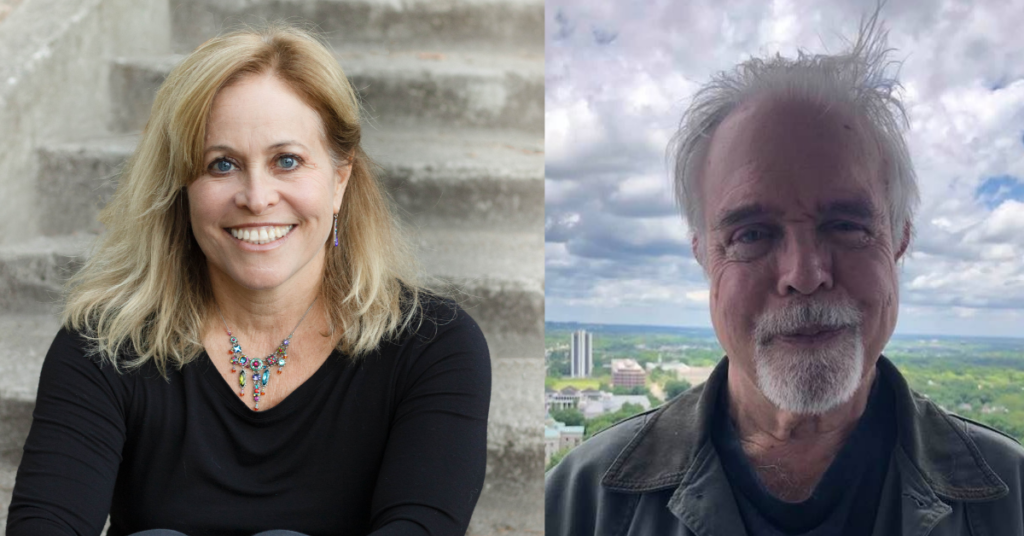
Aaron Poochigian earned a PhD in Classics from the University of Minnesota and an MFA in Poetry from Columbia University. His first book of poetry, The Cosmic Purr (Able Muse Press), was published in 2012, and his second book Manhattanite, which won the Able Muse Poetry Prize, came out in 2017. His thriller in verse, Mr. Either/Or, was released by Etruscan Press in the fall of 2017. He has published numerous translations from Ancient Greek for Penguin Classics and W.W. Norton. His work has appeared in such publications as Best American PoetryThe Paris Review, and POETRY.

Poochigian’s new book, American Divine (March 20, 2021), has won the 2020 Richard Wilbur Award. Recent Poetry Night feature Dana Gioia said this about Poochigian’s new publication: “If any doubts remain that a splendidly original poet has arrived, American Divine should settle the matter. The book confirms Poochigian’s status as one of the most arresting poets of his generation. The poems are strong, individual, and unusually accessible despite their capacious erudition. The real critical question is more complicated, namely how does one describe the singular poet Poochigian has become? How does one characterize the potent and omnivorous style he has created? Poochigian is at once a traditional, indeed even classical, and yet his work is idiosyncratic, disruptive, and often disturbing — not the qualities usually associated with a classical sensibility.”

Simply E, the Poetess, will open for Aaron Poochigian. Simply E is a spoken word artist, singer / songwriter, recording artist, and voice actress. She’s currently working on a book of poems set to be released in 2022. Simply E opened for the award-winning, international megastar DaVido, at the Africa Muzik Festival in Atlanta, and has appeared in music videos by BET award-nominated rapper Big KRIT, and by the violinist Demola, featuring DaVido. Simply E graduated from the University of Memphis with a degree in Social Sciences, and is a candidate in the Georgia State University Executive MBA program. An artist and mentor active on Clubhouse and elsewhere, E divides her time between Atlanta and Memphis. Find out more about Simply E, the Poetess, at https://linktr.ee/ethepoetess.

Dear Friends of the Pub Quiz,

Once a knock came on my office door, and when I answered it, one of the heads of Strategic Communications at UC Davis wanted to know if I would be willing to appear on televised panel that was starting in five minutes? I said yes.

Evidently a panel of VIPs was missing an important alumnus who had to cancel because of car trouble. I was being asked to stand in for him, to be interviewed alongside then Provost Ralph Hexter and a number of other faculty and administrators. As the mic was being attached to a orange necktie that I thought well complemented my black shirt (this taping took place on Halloween), one of my colleagues looked at my outfit and said, “Somebody didn’t read the memo.” Evidently everyone else on the panel was told what sort of clothes to wear and not wear. As you can tell from the photographs, back then I had a jet-black beard and bright orange pants. If it were not for the tie, I would have looked like a pirate who had recently escaped from the brig / county lockup.

Just before we started taping, I asked one question of our moderator: “What is our topic?” He responded, “The future of the student experience at UC Davis.” Great, I said, I’m ready to go. As you can tell from the transcriptof the 2013 interview, at least the moderator did me the courtesy of asking me the second question, instead of the first. The first thing Provost Hexter said when the director finally yelled “cut” was that he was especially impressed with the only one of us who was not given time to prepare. I replay those kind remarks when I’m having a hard day.

Unlike most people (one thinks of the Seinfeld line: “To the average person, if you go to a funeral, you’re better off in the casket than doing the eulogy”), I love public speaking, and I actually love being put on the spot the way that I was that day in October. Just as I enjoy playing cards with friends, but not doing card tricks, I enjoy making jokes, but I don’t know if I could ever write a joke. 

This is why, even though I am a writer, I believe I do a better job when I don’t script out every word when I give talks and presentations, than when I do. When actress and comedian Bonnie Hunt was recruited to join the cast of Saturday Night Live, she was asked if there would be any room for improvisation, and Lorne Michaels told her “Absolutely not.” As a performer, I’m more in the Hunt camp than the Michaels camp.

This past Saturday night, I did work from a script. I performed a fifteen-minute Pub Quiz at the Davis Chamber of Commerce Installation Gala, their biggest event of the year. Such a short allotment of time meant seven questions and a tiebreaker before I sent teams to confer in their Zoom rooms. By the time we determined the winners (not surprisingly, the team with Mayor Partida and Vice-Mayor Frerichs came in first), and I thanked everyone, we were hauled back into the main Zoom room to hear speeches from the prizewinners. I “finished” about five seconds after we ran out of time. Perhaps a spare moment of improvisation caused the discrepancy, but I immediately forgave myself, knowing how much I relished working a live crowd again!

The Chamber event was as well run as the three-camera shoot back in 2013, but this time, instead of a crew of camera operators and a seasoned director, the entire evening was supported by Tim Kerbavaz, the founder of Talon Audio-Visual, and something called Zoom OSC. It was remarkable how much Tim could do from one control room. I was reminded of Arthur C. Clarke’s famous quotation: “Any sufficiently advanced technology is indistinguishable from magic.”

Although we won’t have the advantage of the Kerbavaz magic, I am available to run synchronous Zoom Pub Quizzes for special events. If you are supporting the Pub Quiz on Patreon at the Adamantium Tier (I’m looking at you, Original Vincibles), you can schedule your bonus event now at no extra charge. For the rest of you, I look forward to seeing how I can add a bit of televised trivia to your lives. If you always suspected that you were smarter than most people you know, including your distant cousins in Chicago or Edinburgh, now is a good time to arrange a family or group competition and have it confirmed.

I appreciate all my subscribers. If you support the Quiz on Patreon and would like to see the bonus quizzes I wrote last week for the Davis Chamber of Commerce or the Unitarian Church of Davis (new supporters!), please let me know. Thanks especially to the teams known as The Mavens, Quizimodo, Quizzers with Attitude, Portraits, The Outside Agitators, and Bono’s Pro Bono Oboe Bonobos. Let’s add your name or team name to the list for next time.

Here are the hints for tonight’s quiz: Expect questions on International Day of the Woman, pairs of cities, Chico, the U.K.’s Centre for Advanced Facial Cosmetic and Plastic Surgery, cartoonists, off-road vehicles, primates, minerals, puck locations, fashion, educated populations, former communists, goodbye stories, closet racialists, high-earners, musicians, cranes, rights, internet silver bullets, shades and shutters, doses, superheroes, unusual hobbies, announcements, grapplers, logical last names, colorful delimiters, fabulous girls, book statistics, and Shakespeare.

Stay healthy! I am vaccinated, and soon you will be, too! look forward to returning to the Pub later this year and returning to all the scripted and unscripted hilarity that we have waiting for us. I had better start exercising my lungs now!

Best,

Dr. Andy

P.S. Here are three questions from last week’s quiz:

  1. Books and Authors. According to Lewis Carroll, what kind of rabbit is crazy?  
  1. Current Events – Names in the News. What former European leader was recently sentenced to three years in prison for corruption?  
  1. Sports. When Hank Aaron broke the home run record, whose record was it?  

P.P.S. “Anxiety is the dizziness of freedom.” Soren Kierkegaard

Dear Friends of the Pub Quiz,

I had so much grading to do this past weekend that I almost considered having my wife Kate serve as this week’s guest blogger, for she has written an excellent little essay about our son Jukie in commemoration of National Rare Disease Day, which was yesterday.

Moments after I posted a picture of Jukie on Instagram, I got a notification on my phone informing me that Chris Brogan was inviting me to join a Clubhouse room on the topic of brevity. If you don’t know of Chris Brogan, he is a compassionate and eloquent marketing and communications expert who has written nine books, most of which I have read. And Clubhouse is a new audio social medium, an experiment in communal podcasting that gives people with iPhones opportunities to talk with others who share their backgrounds or enthusiasms.  Anyway, because we were the first two people in the room, he said, “Well if it isn’t Dr. Andy!” He remembers me from being interviewed on my radio show a few times, and from our occasional correspondence over the last decade. I took a moment to tell him about the special day, about my son Jukie, and about Smith Lemli Opitz Syndrome. He lamented that people who live with especially rare syndromes can’t count on the federal government or foundations funding research into the possible causes and treatments of such syndromes.

Soon the Clubhouse room was full. People flocked to the conversation not because they wanted to hear about Jukie, but because they wanted to hear some Brogan insights about the topics he knows best: connecting with others, telling stories, and making online communications valuable and meaningful. They also wanted to learn a lesson or two about brevity, which Cicero called “a great charm of eloquence” and which, as you probably know, Shakespeare called “the soul of wit.” 

I had much to say on the subject, including lessons on “cutting” as the First C of Style according to Ann Raimes, on the importance of brevity in poetry (which Gwendolyn Brooks once called “life distilled”), and on the delightful training that the entire twitterverse has undergone in order to pare down their messages in 280 characters or fewer. But I chose not to share any of these fascinating lessons, because soon Chris was bringing others up to the stage, and I reminded myself that I find the Clubhouse experience much more engaging as a listener than I would if I were to “profess” longwindedly, perhaps even tediously, to everyone in the room, as professors sometimes do. As I learned more and more from Chris, from Mitch Joel, and from Kerry O’Shea Gorgone, among others, I recalled what the cynical Greek philosopher Diogenes said, “We have two ears and one tongue so that we would listen more and talk less.” 

Nevertheless, I have made contacts and perhaps some future friends on Clubhouse. Sometimes people I chat with there end up following me in other social media, and we have more of a chance to connect. When I return to live airings of my radio show (I got my second vaccination shot this past weekend!), I know that Clubhouse will be an excellent place to recruit guests. So many people in this new social medium seem eager to self-promote, and KDVS on a Wednesday afternoon reaches more people than even the most populated Clubhouse rooms (such as the ones that featured recent conversations with Bill Gates or Tiffany Haddish), so I should be able to attract a steady stream of new voices. People will they be excited to talk, to tell us how what they have to offer will change the world for the better, but will they be willing to be brief? Or will I? As the poet Rumi says, “Yesterday I was clever, so I wanted to change the world. Today I am wise, so I am changing myself.”

I have a few Clubhouse invitations. So far you can participate only if you have an iPhone, and only if you have an invitation. Reach out to me at yourquizmaster@gmail.com if you want to check it out, and I will share an invitation with you if I have any left. As I wrote about last week, many of us have more time to reflect, to create, and perhaps to talk with strangers during the ongoing, if possibly loosening, lockdown than before. I don’t want you to waste your time as you try to figure out how it works; that said, after you give it a chance, you might find something of value in Clubhouse.

And eventually I will try to add some value myself. While later this month I will be Zoom- hosting live Pub Quizzes at the Installation Gala for the Davis Chamber of Commerce and the Unitarian Universalist Church of Davis, I might reach even more people, including new people, if I were to host a pub quiz-style trivia contest on Clubhouse. Would you be interested in participating in a Clubhouse Pub Quiz, competing against people who might not follow the rules? The novelty of providing answers to real-time questions might appeal to you, but the prizes will be about the same as those who have participated in the quarantine quizzes that many of you have subscribed to. 

Speaking of which, I really appreciate all the subscribers to the Pub Quiz, including one person who upgraded his membership last week, and someone else who subscribed at the Mithril Tier today. You subscribers make this weekly event happen, and you get to take advantage of the 50 or so bonus questions on Patreon, some of which appear in different forms on the weekly quiz. The sustaining subscribers also receive bonus goodies, which last week included a copy of the new Sanjay Gupta book, Keep Sharp: Build a Better Brain at Any Age. Sharp brains would be one of the fringe benefits of listening to conversations with smart people, or participating in a weekly pub quiz. I look forward to doing more of both in 2021.

Tonight’s Pub Quiz will feature questions on topics raised above, and on the following: The state of Oregon, the wisdom of James Clear, centers, first films, Vietnam, people transported to California who are named Ricardo, scaffolds, broken records, skateboards, cavities, dystopias, heads of state, crazy rabbits, flowers, current events, family size pizzas, what countries are named after, the Golden Globes, an anorak, numbers in the future, sequels, the Sacramento Kings, atmospheres, words that end with the letter X, inventors, U.S. Senators, beverages, and Shakespeare.

Thursday night at 8 Pacific Time is Poetry Night in Davis. This time we are featuring Sacramento poet laureate emeritus Indigo Moor and local memoirist and poet Andrea Ross. Both have new books out. Find out more at the Poetry in Davis website, or just plan to join us every first and third Thursday of the month at 8 PM. If Clubhouse teaches us anything, it’s that we need more synchronous community while we are staying safe in our homes.

Some of you will see the quiz in your mailboxes later today, some will see the link to the audio or video quiz tonight before 7, and all of the rest of you are invited to subscribe to the Pub Quiz via Patreon. Thanks!

Dr. Andy

yourquizmaster@gmail.com

https://www.yourquizmaster.com

P.S. Here are some sample questions from last week’s quiz:

  1. Mottos and Slogans and Nicknames. What U.S. President had the nickname The American Cincinnatus?     
  1. Internet Culture. As of 2021, what is the second most-popular desktop operating system, after Windows?  
  1. Animated Films. In what 2012 animated film does the hotel chef Quasimodo and his pet rat Esmeralda learn that the film’s protagonist, Johnny, is a human and then kidnap him in order to cook him? 

P.S. Please add Poetry Night to your calendar for Thursday. Here is the Facebook event page.

Dear Friends of the Pub Quiz,

500,000 is a huge number. It’s about the population of Sacramento, or the combined populations of Barbados and Guam.

Even though recent trends are favorable rather than calamitous, epidemiologically speaking, we nevertheless mourn today the deaths of half a million Americans, or about as many combat deaths as what we suffered in the Civil War and World War II, combined. The current war against a disease has visited every community in America. We all know someone who has lost an elderly relative to Covid. For example, you know me.

Unlike faraway wars, to which the brave and perhaps the unlucky are dispatched, the pandemic affects all of us, our daily habits as well as our attitudes. But are we taking full advantage of the perhaps extra time we have been allotted by our home-bound isolation, what for many of us might be called an early and temporary semi-retirement? I wonder if thought workers and creatives will look back on the Covid era the way that partisans look back on a time when they controlled both houses of Congress and the Presidency, thinking that they should have done more when they had the chance.

As a writer, in some ways I have appreciated the shift towards reflection and time savings that comes with relative seclusion. Rather than rushing off to the movies, to retail stores, to dinner, or even to host a Pub Quiz, I try to live the life of the modern literary recluse: I’m reading books, participating in conversations with thought leaders on Clubhouse, and taking long walks. This past weekend, I walked 30 miles (if you include Friday). Today my legs are complaining about the treatment.

When I told a friend that I aspire to walk 2000 miles this year, he said that a related impressive feat would be to drive fewer than 2,000 miles this year, that is, to walk more than one drives. I might just be able to pull that off. While Kate and I used to take monthly trips to Sacramento to see plays at the B Street Theatre (where Dave Pierini is one of our favorite director / performers), this year my only trip to my former hometown has been to get a vaccination shot at The MIND Institute. The mileage on our new (used) minivan is pretty close to where it was when we bought it this spring. We thought we would use that van to visit family in Los Angeles, but in the garage it stays as we try creative alternatives – Zoom and Marco Polo, for example – as alternatives to actual family reunions. As Erich Fromm says, “Creativity requires the courage to let go of certainties.” 

If we are working on creative or writing projects, this past year of Covid requires that we call upon our strengths, and consider what discipline we can call upon to make progress despite the indeterminate boundaries of our strange and potentially immobile commute-free lives. We need systems of rigor in order not to give in to what James Clear calls “the ease of distraction,” or to what Toni Morrison calls a “time for despair.” As my vaccinated centenarian UC Davis colleague Wayne Thiebaud says, “Discipline is not a restriction but an aid to freedom.” 

The day, the year, is shrouded in loss. We have all lost something, but as G.K. Chesterton says, “How you think when you lose determines how long it will be until you win.” While I have lost opportunities to travel or to spend time with friends, I’ve gained some time to work on book projects. For example, I’ve been researching and curating a collection of bite-size advice from and for writers. It could be said that I’ve been gaining inspiration from the encouraging thoughts of great writers while compiling what I research into a book that presents such advice. Consider these 14 examples that focus on a writer’s determination, perseverance, and courage:

“Most men fail, not through lack of education, but from lack of dogged determination, from lack of dauntless will.” Orison Swett Marden

“It is not brilliance or facility that is necessary, but the determination to bear and even enjoy the dull process of wading into one’s own bad prose again, and one more time, and then once again, with the utmost concentration and taste, looking for opportunities to mine deeper.” Stewart O’Nan

“I keep on making what I can’t do yet in order to learn to be able to do it.” Vincent Van Gogh

“Inspiration may sometimes fail to show up for work in the morning, but determination never does.” K.M. Weiland

“It is worth mentioning, for future reference, that the creative power which bubbles so pleasantly in beginning a new book quiets down after a time, and one goes on more steadily. Doubts creep in. Then one becomes resigned. Determination not to give in, and the sense of an impending shape keep one at it more than anything.” Virginia Woolf

“Talent is insignificant. I know a lot of talented ruins. Beyond talent lie all the usual words: discipline, love, luck, but most of all, endurance.” James Baldwin

“A deadline is, simply put, optimism in its most kick-ass form. It’s a potent force that, when wielded with respect, will level any obstacle in its path. This is especially true when it comes to creative pursuits.” Chris Baty

“Writing is sweat and drudgery most of the time. And you have to love it in order to endure the solitude and the discipline.” Peter Benchley

“Inspiration is wonderful when it happens, but the writer must develop an approach for the rest of the time.” Leonard Bernstein

“Greatness is more than potential. It is the execution of that potential. Beyond the raw talent. You need the appropriate training. You need the discipline. You need the inspiration. You need the drive.” Eric Burns

“Success usually comes down to choosing the pain of discipline over the ease of distraction.” James Clear

“Writing requires more than anything else, tremendous discipline. At the end of the day, whilst there are times when it is wonderfully creative and fun, a lot of the time it is just a job. And that means showing up whether you feel like it or not. It also means you write, whether you are inspired or not, and the only way to unlock your creativity is to start writing.” Jane Green

“Take a chance on making mistakes to create something you haven’t created before.” Dave Brubeck

“To be a serious writer requires discipline that is iron fisted. It’s sitting down and doing it whether you think you have it in you or not. Everyday. Alone. Without interruption. Contrary to what most people think, there is no glamour to writing. In fact, it’s heartbreak most of the time” Harper Lee

I will close with some words from Toni Morrison, whose birthday many people celebrated last Thursday. She passed away a few months before Covid 19 was discovered, but her wise words, about the necessity and resilience of art and artists, can offer us guidance with regard to the difficulties we have been facing, and that we face today, as we all take a moment to remember the half-million who have died: “This is precisely the time when artists go to work. There is no time for despair, no place for self-pity, no need for silence, no room for fear. We speak, we write, we do language. That is how civilizations heal.” Let the healing begin.

In addition to topics raised above, tonight’s Pub Quiz will feature questions on Paris streets, Quasimodo, musical contests on black and white television, biological branches, famous years in baseball, princes, Nebulas, algorithms, populated countries, operating systems, nicknames, Paul Cézanne, Sicilia, champions, TV icons, new parties, Hugos, old people, famous captains,  film adaptations, golden friends, national herbs, Thai carnage cruises (so to speak), Oscar nominees Harrison Ford and Barbara Hershey, regrets, linguistic wasps in Harry Potter, current events, and Shakespeare.

What a joy it was to run into a member of The Outside Agitators while I was on one of my walks yesterday. The Agitators recently upgraded their membership, as they share Pub Quiz content with their entire team. If you have more than one person benefitting from your sponsorship of the Pub Quiz, I recommend you also consider upgrading your membership. Then you could join Quizimodo, The Mavens, and Bono’s Pro Bono Oboe Bonobos. If you are a member of The Original Vincibles, your curated book choice for February should arrive at the songbird neighborhood tomorrow.

See below for three sample questions from last week’s quiz. Stay healthy and creative!

Dr. Andy

https://www.patreon.com/yourquizmaster

  1. Books and Authors. Who wrote the books V, Gravity’s Rainbow, and The Crying of Lot 49?  
  1. Current Events – Names in the News. What actor and fighter has been dropped from the Disney+ TV show The Mandalorian because of her posts on social media?   
  1. Sports. Born in South Africa, what Canadian former point guard and two-time NBA MVP is now the coach of the Brooklyn Nets?  

P.S. Our next poetry event, featuring Davis author Andrea Ross and former Sacramento poet laureate Indigo Moor (both of whom have new books out) will take place on March 4th at 8 PM. Plan to join us! Details to come at https://poetryindavis.com.

Downtown Davis on Valentine’s Day Eve

Dear Friends of the Pub Quiz,

Valentine’s Day is a time for poets to shine. 

Recently I taught a series of online poetry workshops for members of the Unitarian Universalist Church of Davis, with the objective of each participant writing a love poem to share with a lucky recipient. In an age where the internet is flooded with advertisements for inexpensive consumer goods, a personalized gift of creativity – one thinks of a piece of art, a video message or montage, or a poem – finds its value in its uniqueness, and often in its transience: nobody has to make room in a closet or a garage for a poem.

Many people are exploring their creative sides because they finally have some time to do so. One can binge only so much Netflix or like so many Facebook posts before one feels called out to create, to connect, or to experience something momentous or magical. With so many connections or experiences remaining inadvisable for the unvaccinated, we are left to create. One of my journalism students submitted an article last month for which she interviewed three different musicians who had created new albums in 2020 (as Paul McCartney did) because of the absence of typical occupations and interruptions. I love to imagine people all over the world starting new creative habits. Albert Einstein once said, “The intuitive mind is a sacred gift and the rational mind is a faithful servant. We have created a society that honors the servant and has forgotten the gift.”

When I asked a friend about how she was handling the personal isolation, she responded that meeting “on zoom is a great connection style for me. I may even prefer it to in-person meetings. It’s easier for me to manage energies somehow…whatever that means!” I agree, finding sanctuary in the stillness of my home – the French bulldog in my lap, the grove of trees out our western windows, my headphones resonating with the playlist my daughter made for me – a collection of tiny comforts that await me mere seconds after I close the Zoom window. The long interruption of our former busyness gives us all an opportunity to reflect on how we manage and use our energies.

Even on a day like this past Wednesday when I ticked eight zoom meetings off my to-do list, I still found time to dine on a gourmet tofu egg scramble courtesy of my wife Kate, take a long walk with Jukie, and work on a love poem. Arthur Koestler says that “Creativity is a type of learning process where the teacher and pupil are located in the same individual.” With that in mind, we writing teachers often respond to our own assignments, and so it was for me this Valentine’s Day, when I presented this to my beloved:

Valentine’s Day Morning with Kate

Breaking-morning gifts, your eyes, your meals, take me back, and aback,

Elongating the languor of our morning off, aromatic Eierspeisen synesthesia

Meandering through our tilting home like the ghost of an unforgotten cat

Yearning for the someone who answers every question with love, whether it be

Valentine love, maternal love, or spousal love: the sparks that conclude with confetti.

Amorous arms entangle me entrancingly, with skin as soft as an alpine chamois,

Long legs, saucer eyes, and slender waist: you are my elegance encyclopedia,

Effervescent center of our family, the centripetal domestic magnet, our hub,

Never more exquisite than when producing breakfasts for Geneva, Truman, and Jukie,

The chef for our every catered meal, and every fancy coffee drink’s barista.

I couldn’t imagine raising our nutty, joy-filled family with anyone but you,

Nor could I imagine another who could sustain my lifetime of grateful amazement.

Every day, my Valentine, I am nourished by your kiss, a pinpoint of your beauty.

I live in a family full of writers. Each of us but Jukie is working on a significant writing project or two, so we sometimes have conversations that one might expect to hear around an MFA workshop table than around a typical dinner table. Such was the case last night when Kate overheard the kids and me discussing the fact that this near-sonnet I wrote is a “double-acrostic.” Mishearing that Geneva had called the poem was “caustic,” Kate quickly corrected her, saying that it is a sweet love poem, and that it isn’t caustic at all. 

At least she didn’t think we were using the word “xenodiagnostic.” As you may already know, because likely you have taken more science classes than I have, xenodiagnosis can document the presence of infectious disease microorganisms by exposing possibly infected tissue to a vector and then examining the vector for the presence of the microorganisms or pathogens it may have ingested. Vectors have so many meanings, depending on whether you are an airplane pilot, a graphic designer, or a Euclidian mathematician, but I for one didn’t know that vectors could “ingest,” even if the vector is ingesting something as small as a microorganism. Clearly there’s a poem (or a monster movie) in there somewhere.

With regard to my valentine poem for Kate, which I share here with perhaps more transparency than is warranted, the secret messages I stuck in there are also full of love, as you may be able to decipher. In his most recent album, Elvis Costello insists that “Love is the one thing we can save.” Memories of love will be primarily what I am saving from this Valentine’s Day, and from this past plague year. I wish the same for you.

In addition to topics raised above, tonight’s Pub Quiz will include questions about countries of origin, invented slogans, famous athletes, classifications of canines, rappers, animated TV shows, anagrams with the initials HC, sweet names, generic names, MVPs, missiles and unexpected tears, paladins in love, pairings of arms, cultural capitals, vote totals, palindromes, brown moss and smith, Oscar-winners with Irish names, Mediterranean destinations, cocky elves, degrees in physical education, hills, missing letters, economic shrinkages, Romance languages, expensive kilograms, animals and video games, current events, and Shakespeare.

Thanks to new Pub Quiz patron Alex Hovan, who opted for the discounted yearlong subscription option. I rewarded Alex with some bonus digital Pub Quiz goodies when he subscribed, and I will continue to do so today. Like Alex, you should check out the yearlong subscription option on Patreon, if only to unlock access to the photography pub quiz questions I add a few times a week on the Patreon website. One of you guessed “Natalie Wood” as a response to one 1950s starlet’s photograph and list of best films, but that was a bit off. I await your guess. Thanks also to the sustaining sponsors of the Pub Quiz: The Original Vincibles, Quizimodo, The Outside Agitators, and Bono’s Pro Bono Oboe Bonobos. I would love to add your name or team name to this list next week.

Be well.

Dr. Andy

P.S. Here are three Pub Quiz questions from last week:

  1. Books and Authors. What German-born American political theorist published her influential study The Origins of Totalitarianism in 1951?   
  1. Current Events – Names in the News. What Wyoming Republican recently survived a challenge to her leadership position in the House of Representatives?  
  1. Sports. In what U.S. state was seven-time Superbowl champion Tom Brady born?  

P.P.S. “The things we fear most in organizations — fluctuations, disturbances, imbalances — are the primary sources of creativity.” Margaret J. Wheatley

P.P.P.S. Poetry Night this coming Thursday at 8 PM will feature short readings by Patrick Grizzell, Traci Gourdine, and Jeanne Wagner. Set your reminder now, and then join us in my Zoom room at that hour to be revivified by these three masters of creativity!

Dear Friends of the Pub Quiz,

I got my first vaccine shot Friday. Because my wife Kate and I are caretakers of a son with autism, we were moved up in the eligibility line. Ironically, because of California policies, so far our adult son himself remains ineligible. Because of our age and other factors, in our household Kate and I are the most susceptible to long-term ill effects from contracting Covid, but two of our three kids also have significant health issues. Like all of us, we look forward to seeing the second vaccine shot jab the arms of all family members, more for our safety than because we need to travel or attend parties. 

Today’s bright sunshine that is visiting Davis, and I hope wherever you are, makes us naturally more optimistic. With regard to vaccinations, we will learn in the coming weeks and months if that optimism is warranted. From what I read in the news, and from what I see on social media of my older friends getting vaccinated, we are moving in the right direction. When I talked to my 91 year-old friend Hannah Stein last week (she’s one of my favorite local poets, and she has a new book out!), she told me that the shot didn’t hurt, as if I were one of the ones who was afraid of vaccines. Let it hurt, I said to myself, for then I know it’s working.

Believe it or not, as of February 7th, 2021, 12.45 doses have been administered per 100 people in the United States. We are far behind Israel, which has administered an impressive 64.3 Covid-19 vaccine doses per 100 people, but we are taking positive steps. As Colin Powell says, “Perpetual optimism is a force multiplier.” 

We know that the pain is felt by individuals, rather than in the aggregate, and I myself can think of people close to me who have succumbed to that pain, and who are wrestling with it right now. We all know someone whose circle has been touched by Covid-19, but that doesn’t mean that the difficulties have been evenly distributed. Reflecting on interviews for a first assignment in my journalism class this quarter, one of my students wrote this astounding sentence about one of her interviewees: “Many people in Garcia’s family have caught the virus, including herself, her mother, her brother, her cousins, her aunts, and uncles.” My student argues correctly that people with front-line jobs, whether working in the health care industry or even in a grocery store, are repeatedly exposed to the virus, and then they bring that exposure home to share, sometimes with families who live in close quarters. As the death toll grows, those of us who have dodged the Covid bullet should always remember those who hear “gunfire” every day.

I recognize how lucky I am. People like me interact with colleagues and students only via Zoom. One of my students from a class I taught last spring impressed me so much that this quarter I hired him, and we have been working on writing and organizational projects twice a week since. Even though this student lives about two blocks from me, and I meet with him regularly, collaborating with him on my bonus work of 2021, I have actually not “met” him in person. Depending on how we define terms, we don’t really “meet” with people anymore. For example, I give and get hugs in this household all the time, but likely the last time I hugged someone other than these four was not this February, but last February.

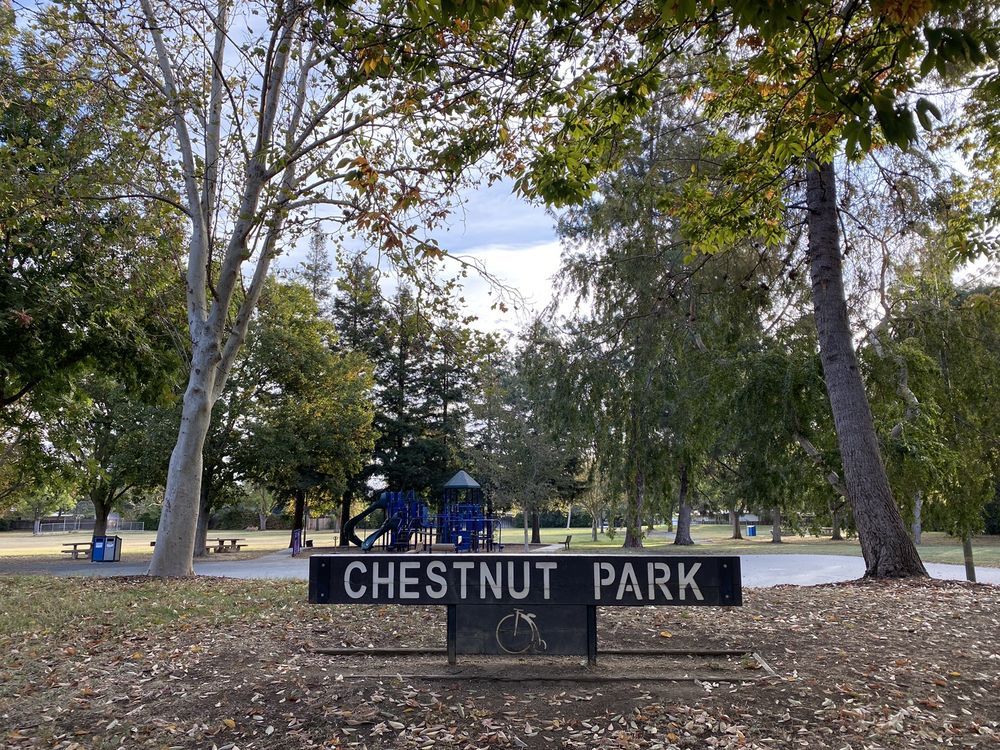
I did meet someone new for a brief conversation on the street yesterday. As I was walking to Sunday morning meditation in Chestnut Park, I encountered a man in his early 70s who seemed perplexed and amused that his dachshund had left his yard to walk across the street to say hello to me, showing the sort of fickleness that we typically ascribe to cats. I asked the man if  he wanted me to scoop up his little dog and return him, but the man said no, the dog just wanted to sniff around, and that soon he would come back home (this was a cul-de-sac side street with no car traffic). I told him that his dog was cute, and that I hoped he would have a good Sunday. And then, speaking of Sunday, with a detectible tinge of loneliness in his eyes, the man asked me if I was going to watch “The Game.”

Sporting events for many people, especially men, function in many ways: the spectacle, the competition, the statistics, the heroic players, the mystery about the outcome, the athleticism, etc. But I suspect for many people, again especially men, sports teams and events provide a ready topic of discussion, a way to connect, and an excuse to socialize. I felt instant sympathy for this elderly sports fan. Was the dachshund this man’s only company over the last year? How much did he crave a man-to-man talk about sports? Perhaps he watches ESPN the way that many people I know in 2020 watched MSNBC. 

Either way, I was not the sports fan he was looking for. When he asked if I planned to watch the game, I told him that I would check in with the family. When I checked in with Jukie Sunday afternoon, he indicated that he was eager for a walk, so walk we did, passing through neighborhood after neighborhood where we overheard many blaring TVs, but not much laughter or cheering. In Davis, I suspect, we keep our distance so that we survive our parties, and for most of us, that means another season of isolation, another season of patience. The vaccination numbers should give us hope, and reason to be optimistic. Let’s hope our patience pays off! For you and your families, may the future reunions – as well as the plays, the comedy nights, and the pub quizzes – be all the more sweet because of the past year full of distracting delays that compete for our many available hours.

In addition to topics raised above, tonight’s Pub Quiz will feature questions on the following: Disney films, deflations, stones, movie screens, cemeteries in New York, prodigies, World War II vets, Kamala Harris, continents, British buildings, the behavior of empirical phenomena, Jennifer Lopez, Europeans, comedies of errors, elderly actors, food in China, notable churches, silver sluggers, things that cling, economics, Wyoming, minor Greek gods, political theory, current events, and Shakespeare.

Thanks to everyone who supports the Pub Quiz on Patreon. One team recently upgraded their membership, so I awarded them two months of video pub quizzes. Perhaps you would like to sign up for a cheap ($1 a week) or premium Pub Quiz membership? I would love to share all of this top-notch content with more people! Thanks especially to The Original Vincibles, Quizimodo, The Outside Agitators, and Bono’s Pro Bono Oboe Bonobos for their extra support of this weekly endeavor. Please visit Patreon to learn more. 

Be well!

Dr. Andy

P.S. Here are four questions from last week’s quiz:

  1. Wonder Women. The character of Wonder Woman appeared in comic books in the same year that Helen Reddy and Ann Margaret were born. Name the decade.  
  1. Name the Bob. First name Bob, who said the following? “I’ve never been able to understand the seriousness of it all, the seriousness of pride. People talk, act, live as if they’re never going to die. And what do they leave behind? Nothing. Nothing but a mask.”  
  1. Pop Culture – Music. Introduced by Leonard Bernstein, what still-living cellist played for President Kennedy in 1963, accompanied by his sister on piano?   
  1. Science. The CO in the word COVID stands for “Coronavirus.” What does the D stand for?  

P.P.S. Good advice from Tennessee Williams: “My work is emotionally autobiographical. It has no relationship to the actual events of my life, but it reflects the emotional currents of my life. I try to work every day because you have no refuge but writing. When you’re going through a period of unhappiness, a broken love affair, the death of someone you love, or some other disorder in your life, then you have no refuge but writing.” 

Dear Friends of the Pub Quiz,

A South Carolina writing professor whom I’ve never met wrote me a message yesterday that triggered my feelings of affection and appreciation for his sister, a departed Geology professor at UC Davis.

As I write this, the room is silent except for the wall’s analog clock, subtly sounding a song of fractions: one sixtieth of a minute, one sixtieth of an hour, one eighty-six thousand, four-hundredth of a day. Always approaching zero, sometimes life feels like an asymptote. There are 31,536,000 seconds in a year, and a limited number of years in a lifetime. For my dad, that number of years was 71. For my best friend Tito, that number was 26. For actor Dustin Diamond, that number was 44. For my close friend the Spanish professor Francisco X. Alarcón, that number was 62 (Having passed away in 2016, he should be retiring about now). For UC Davis Distinguished Professor of Geology Louise Kellogg, that number was 59. 

This is what I wrote to David Kellogg yesterday:

Hi David! 

Now that I see your name, I remember that you and I have chatted on Twitter about Louise. 

I adored her. She and I became friends at a Chancellor’s Fall Summit about 15 years ago, and we had had many conversations in the ensuing years. About four years ago, we arranged to discuss some teaching topics, so I met her at her office overlooking Putah Creek. Our meeting stayed on topic for about 15 minutes, and then meandered variously for about the next hour, much to my delight. She cared so deeply about her students, and every interaction I had with her reminded me of her humanity and humor. I invited her to my 50th birthday party in 2017, but she wasn’t able to attend. 

Believe it or not, Louise signed up to receive notices about the poetry events that I host twice a month, and I think she may even have joined us at some of the early events we held in downtown Davis. Here is an example of something she wrote to me in 2009, via Facebook Messenger: 

“Hi Andy: it was nice to see you too. And I enjoy getting the notices about the poetry readings at Bistro 33. I’m actually on sabbatical leave this winter and spring (that’s why I look so relaxed). At some point in the future, I’d be happy to talk about visualization to the FMFP [The Faculty Mentoring Faculty Program, an initiative that I ran for years at UC Davis]. Best wishes, Louise” 

I love the thought of her admitting to looking so relaxed. Perhaps we ran into each other at the hardware store? I don’t remember now, but I do know that I treasured our conversations, and lament her loss. 

I regret, too, that I didn’t get to express my condolences in person during her memorial service, which I only heard about the next day. She was such a special person, and I’m sure you continue to feel her absence (and her presence) in the almost two years since her passing. 

I send best regards, 

Andy

We express condolences in different ways. When the poet Amiri Baraka passed away, a number of poets gathered at a special Davis Poetry Night that was devoted to his memory and his poetry. This was meaningful to me, because Baraka and I once had a two-hour conversation on the way to Davis from the San Francisco airport, a drive that I started feeling intimidated, and finished feeling like I had made a new friend. When Francisco Alarcón died, I hosted a celebration of his life with members of the huge community of Latinx and Native poets that he had fostered during his decades at UC Davis. Strategically, Francisco’s admirers had me introduce the Anglo poets reading and speaking that night, while they rotated the introduction of the Spanish-speakers. They rightly feared that I would mangle the pronunciation of their biographies.

My son Jukie received double-eyelid reconstruction surgery in the same month, March of 2004, that my father passed away. Our favorite Fairfield School teacher, Mrs. Neu, arranged for the Fairfield parents to deliver us dinners as Jukie recovered, a gift that sustained us during that difficult time more than cards or flowers could have. What a welcome strategy that was to share condolences!

I don’t know if my words to David Kellogg were any consolation, but I know they were heartfelt. I later realized that I was quoted in the official UC Davis “In Memoriam” article written about Louise Kellogg, one in which her colleague Mike Oskin called her “a compassionate leader,” something any of us would wish to be called. Oskin continued: “Louise was a great scientist, a broad thinker capable of translating her insights to new fields, a kind and wise mentor, and a tireless advocate for diversity in the sciences.” 

Facebook gives us an opportunity to share fond memories of our friends after they have passed on. I am friends now with more than 20 people who still have Facebook pages even though they have passed on, including Louise and Francisco. (As I have written elsewhere, Tito and my dad lived before or untouched by the digital revolutions of our lives, and thus did not participate in our social media communities.) For those of us who were friends before they passed, we have already been welcomed into the departed’s community of Facebook connections. For those who missed that opportunity, we will forever be outside that circle.

Or so one would think. Once a few years ago I had been alerted by a staff member in the English Department that one of my previous students had died after being struck by a car on a Midtown Sacramento street. Heartbroken, I Googled the student’s name, came across his Facebook account as the first “hit,” and clicked on his name. Imagine my sadness when I saw the phrase “[Student Name] sent you a friend request,” and was invited to confirm or delete the request. I confirmed and then entered his world, if only to offer my condolences to his community in their place of grief, a place that too many of us know these days.

Tonight’s Pub Quiz will feature questions on topics raised above, as well as on the following: Fractions, wedges, impertinence, famous environmentalists, extra pairs of shoes, square kilometers, sincerity, words that you didn’t realize were acronyms, President Kennedy, an appropriate Face for February, singular for calamari, famous cages, writing habits, a cross for a king, boardroom humor, hands and masks, tall women in Europe, debut performances, people with two first names, rich uncles, capes, people who ask favors of robots, imperative happiness, current events, high scores, ignoble nominees, kindness, May Sarton, water vapor, Italian words, bonfires, morality in government, and Shakespeare.

I am hosting a poetry reading this coming Thursday with Barbara Ruth Saunders and Rick Lupert. Add your name to Poetry in Davis, either the mailing list or the Facebook group, to find out more.

Thanks to the Pub Quiz patrons, including representatives from teams such as The Original Vincibles, Quizimodo, The Outside Agitators, and Bono’s Pro Bono Obo Bonobos, who make these newsletters possible. If you haven’t already, please join them on Patreon in supporting this weekly endeavor.

Thanks for your help and support. Stay safe!

Dr. Andy

P.S. Here are three questions from last week’s Pub Quiz:

  1. Science.  Starting with the letter F, what do we call a tail-like structures that helps the cell to move?  
  2. Books and Authors. For what badly-written books is Stephenie Meyer best known?  
  3. Shakespeare. Reading a Shakespeare sonnet on YouTube during every day of the coronavirus lockdown, what knighted British actor has been nominated for Olivier, Tony, Golden Globe, Emmy, Screen Actors Guild, and Saturn Awards?  

P.P.S. “Death ends a life, not a relationship.” Mitch Albom, Tuesdays with Morrie

Dear Friends of the Pub Quiz,

We play the Quiz because we love games. Some play to compete, endeavoring to best other players, or other teams. Some play to learn, feeling that when they have done well, they have bested a younger version of themselves. Some play to explore, to reach out, asking what new topics might we investigate? Some play to circle the wagons, to hold on, asking do I still know what I have learned in school? Some play to justify all the unassigned reading they do, imagining the rewards of recognition from others, as well as the gratification that comes from knowing that the investment in one’s self has been made relevant in the arena of the pub quiz.

A pub quiz is a game of skill, but it also depends upon chance. What are the chances that you have traveled to New Orleans, studied the history of pockets, or made friends with Republicans? Any of these topics might come up, as you regulars have already discovered. Once I attended a pub trivia event hosted by current Davis City Councilmember Will Arnold, and Will asked us a question about a relatively obscure professional wrestler who “won” a number of important bouts in the early 1980s. Sitting with two university colleagues whose acumen and wide-ranging knowledge I admire, I was almost embarrassed to step forward with the answer. Did they look on me with admiration, or with pity, suspecting the worst about my misspent youth?

One game that I played often in that same time period, the late 1970s and the early 1980s, was Dungeons and Dragons. I read and digested the core rulebooks, the lists and statistics of the monsters, the dungeon modules that one could use to challenge players. And challenge them I did. Somehow, even back then, I was always the host, the dungeon master, the guy in charge, in this case tasked with imagining and describing worlds and the creatures that would confront the armed adventurers who would courageously seek out battles and treasure.

As I was a child and then later a teenager when I organized and ran these games, I’m not sure I did a very good job. We had far fewer video games back then, so many of the modules we played were substitutions for the sort of aggression that geeky kids would later explore in the arcade at the cost of a quarter. As a result, the unimaginative dungeons I home-brewed rewarded the style of play that I later read to be called the “murder hobo,” a terrible term for a player character who would rather fight monsters than negotiate with them.

(In a different sort of game, a thought experiment, I imagine my current self spending some therapeutic, academic, and life-counseling sessions with my younger self. Now that I meditate regularly, march for peace and justice when given the opportunity, find tranquility in ten-mile walks around town, and read books such as Marshall Rosenberg’s Nonviolent Communication (A Language of Life), I’m sure I would have had a lot to share with young Andrew, but he would not have had the patience to spend much time with someone he would see as a self-satisfied and altruistic pedant. What would you say to your younger self? And would your younger self listen?)

So in those distant years of playing, I was always the Dungeon Master, just as in this era, before Covid, if there is a crowd, whether it be of bargoers or students, I’m probably the guy standing up front with the microphone, asking annoying questions with a smile on my face. The subtext has always been this: I have planned some tricky adventures for you!

Like chess, Dungeons and Dragons is in a resurgence (thanks perhaps to Covid, Zoom, and Discord), and sometimes we must resurge ourselves with the changing times. This coming Wednesday evening I will be playing Dungeons of dragons with a group that does not include a blood relative (which has rarely happened), and I will be playing as a player character – in this case, a monk – instead of as the dungeon master (which has never happened). I hope the pedantic blowhard in me will not be tempted to take hold of the proverbial microphone. 

That said, the poet in me cannot be silenced. I will conclude this week’s newsletter with a poem I quickly wrote about the oddly-shaped dice that are associated with the world’s most famous role-playing game (if you don’t count running for political office).

Dice

The dice themselves 

are monsters, beasts 

with numbered backs, 

colorful pratfall experts, 

collision jockeys.

Those with many numbers

aspire to be marbles,

harnessing the jerky 

jubilant juggernaut

momentum of latitude;

whereas the short dice,

a child’s caltrops,

provoke abrupt halts,

pyramids tossed

into the desert

by Egyptian gods,

tombs inviting explorers,

the exact locations 

of the cursed treasures 

  • – – – – – – – – – – – – – – –

Thanks for reading!

Tonight’s Pub Quiz would be more fun if you could join us. Expect questions on topics I have raised above (aren’t curious to know which ones?), and on the following: tropical birds, fitness, candles, Fargo, Olivier Awards, pirates, vampires, tails, shows of hands, shrinking populations, odd numbers, steps, Presbyterians, legendary musicians, dream sequences, American colonists, mercilessness, occupations, comedians, monsters, John C. Reilly, films that win Oscars for their music, famous sermons, Transformers, submarines, Ohio, machine guns, world leaders and a poet, Saturday Night Live, American presidents, contact lenses, breakfast cereal, tall people in platform heels with little names, navies, current events, and Shakespeare.

Thanks to all the subscribers who support this effort on Patreon, including especially those who have upgraded to one of the higher tiers. The Original Vincibles deserve special thanks, as do members of the teams named Quizimodo, The Outside Agitators, and, of course, Bono’s Pro Bono Oboe Bonobos. They pay extra to keep this whole enterprise afloat, and I really appreciate it. By the way, did you know we once had regular teams named The Nights of Nii, The Wilhelm Screamers, and the Last Pig in Afghanistan? It’s true.

Here are three questions from last week’s quiz:

  1. Current Events – Names in the News. Sworn in today, what is the name of the new junior U.S. Senator from California?  
  1. Sports. To what NBA team was shooting guard James Harden recently traded? 
  1. Shakespeare. Which character in the Shakespeare play The Tempest says “My library was dukedom large enough”? 

Be safe, and stay inside, no matter what you hear from the Governor of California today!

Dr. Andy

P.S. “The only way you can write the truth is to assume that what you set down will never be read. Not by any other person, and not even by yourself at some later date. Otherwise you begin excusing yourself. You must see the writing as emerging like a long scroll of ink from the index finger of your right hand; you must see your left hand erasing it.” Margaret Atwood

P.P.S. Happy January 25th birthday to Kari Peterson, a longtime supporter of the Pub Quiz and of me. She is one of many friends who makes me grateful for the Pub Quiz – so many introductions to favorite people!

Kamala's Way by Dan Morain at The Avid Reader Bookstore
Kamala’s Way by Dan Morain at The Avid Reader Bookstore

Dear Friends of the Pub Quiz,

Happy Martin Luther King Day!

I feel lucky to know so many writers. Creative, thoughtful, witty, aware, writers make for good conversationalists. As friends, they sometimes disappear for long stretches at a time, and we must be patient with that, for we will all eventually benefit from their self-imposed separations. Some of them, I warrant, are appreciating the particular brand of isolation they have found in the Covid era. Fran Kafka once said “I need solitude for my writing; not ‘like a hermit’ – that wouldn’t be enough – but like a dead man.” Though his friends might have thought him strange Kafka certain advantages as a writer, such as not knowing the distraction of TikTok.

Because I host a lot of writers at my events (more than 75 in 2020, despite the challenges), I feel tempted, even persuaded, to buy all their books. Some of the authors I introduce are intense vendors of their work, all but insisting that everyone at an event go home with a copy of their latest publication. And as host and Master of Ceremonies, I have felt great gratification in discovering that an author’s load of books is lighter at the end of the evening. This dynamic is particularly notable for authors who write with the reader and the book buyer in mind. Mickey Spillane once said, “Nobody reads a mystery to get to the middle. They read it to get to the end. If it’s a letdown, they won’t buy anymore. The first page sells that book. The last page sells your next book.” 

Others authors are like secretive spies, mentioning a website URL or even book title only when pressed. That might be because at the end of a fine poetry reading, one feels that the performance itself was the prize. After seeing a play at The B Street Theatre in Sacramento, I relish the memory of the experience, and don’t feel the need to go buy the play afterwards. Similarly, a well-performed poem can be an embodiment of a cascading series of emotions, rather than just a recounting of words on a page. As Thomas Howard once said, “Everything depends on what is being enacted.”

So I try not to collect to many physical copies of books, as I did rather obsessively in the 1980s and 1990s, but I am reading more unassigned works than ever before, averaging more than 30 books a year, and that doesn’t even include all the poetry books I read. I’m grateful for this opportunity to read so much, for all the intellectual adventures I get to sample through the works of great authors. William Styron said that “A great book should leave you with many experiences, and slightly exhausted at the end. You live several lives while reading.” 

So although I can’t buy all the books of the poets who appear in my reading series and the authors who appear on my radio show (the way I just assume Terry Gross does when preparing for the interviews on Fresh Air), I do try to buy and read the books my friends write. Such was the case with the book published last week by Dan Morain, Kamala’s Way. This political biography of the Californian who becomes our Vice-President Wednesday calls upon not only Morain’s lunchtime meetings with the onetime California Attorney General, but also upon the significant journalistic coverage that Morain’s newspaper (for many years he was the Editorial Board Editor at the Sacramento Bee) and other mostly California newspapers have devoted to Harris as she played increasingly important roles in law enforcement and political leadership in California and as our junior U.S. Senator in Washington DC.

I was encouraged to discover that Kamala’s Way also reviews the important political (and criminal) challenges and controversies of the last 30 years, providing me historical and legislative context for many of the more prominent political figures who I learned about in local newscasts in the 1990s (back before cable when Kate and I used to watch the local news), and in the Sacramento Bee, a newspaper that we read daily during that same period. We lived just two blocks from the Old Governor’s Mansion when we moved to Sacramento in 1991, and thus about ten blocks from the state capitol, so we felt connected to the political life of the city. Also, culturally, there was much less going on in Sacramento in the early 1990s than today. State government was the main game in town. Kamala’s Way helped me connect the names I knew back then to the work of that same era’s most prominent political export: Kamala Harris.

The book explores the complexities of a political leader who has been seen as some as too ambitious and others as too calculating. Kamala’s Way explores why some people have been led to those conclusions, but it also presents anecdotes that attest to Harris’s humor, work ethic, and compassion. Many times Kamala Harris met with crime victims, aged activists in local hospitals, and disabled children to discuss their concerns and aspirations, usually with no reporters or even witnesses nearby. This sort of extra-political empathy raised my regard for our future-looking public servant who resigned from the U.S. Senate today, and who will take the oath of office on the west steps of the U.S. Capitol on Wednesday afternoon.

Dan Morain’s book is worth your time – I read it in just a few days. Kamala’s Way is available now at the Avid Reader bookstore in Davis and anywhere fine books are sold. Support your friendly neighborhood writers!

In addition to topics raised above, tonight’s Pub Quiz will feature questions on the following: pockets and buttons, business communication platforms, wizards, nets, people named Norman, purposes of silicon, surnames, signature sports, best pictures, roguish thieves, people born in Phoenix, Moses, Demitri Martin, health muses, new job titles, princes, justice(s), F words that almost rhyme, fog, microwaveable foods, vertical drafts, explorers, unexpected wings, the Rock and Roll Hall of Fame, rates of growth, cafes, George Clooney, coffee, and Shakespeare.

Speaking of writers, thanks for reading this far, and thanks to all the supporters of the Pub Quiz on Patreon. If you enjoy these newsletters, I’d appreciate it if you showed your support with other fans of the Pub Quiz. On Patreon, visitors and especially patrons will find bonus Pub Quiz questions, almost always with photographs! Thanks especially to The Original Vincibles, Quizimodo, and Bono’s Pro Bono Oboe Bonobos for their sustaining support. Because of the patronage of those teams, all of you benefit. Join them!

Thanks for your attention, and I hope you get to see the video of tonight’s Pub Quiz!

Dr. Andy

P.S. Dana Gioia, the former California Poet Laureate and former Chairman of the National Endowment for the Arts, will be my guest at Poetry Night this coming Thursday, January 21st. I’ve known Dana for 25 years, so I have convinced him to join us to read some poems, read from his new book, Studying with Miss Bishop: Memoirs from a Young Writer’s Life, and answer some of your questions. We all gather in my personal Zoom room this coming Thursday night at 8. Check out the Facebook event, and mark your calendar now!

P.P.S. Here are three questions from last week’s Pub Quiz:

  1. U.S. States. The 981 mile long Ohio River finds its way into the Mississippi River at the southern tip of what state that starts with the letter I?   
  1. Pop Culture – Music. What singer/songwriter wrote these lyrics in a song released in 1983? “You’re a vegetable, you’re a vegetable / Still they hate you, you’re a vegetable / You’re just a buffet, you’re a vegetable / They eat off of you, you’re a vegetable.” 
  1. Sports. In what state did Michael Jordan attend high school?  
The British Burn the Capitol 1814 by Allyn Cox

Dear Friends of the Pub Quiz,

I grew up in Washington, D.C. As Washingtonians, my family and I visited the Capitol less often than other National Mall buildings because we had no representative in Congress. Not residents of a state, Washingtonians live in a perpetual condition of democratic disenfranchisement. Originating in 1768, the complaint of “No Taxation without Representation” was addressed by the American Revolutionary War for all American citizens except for those living in the city named after the preeminent hero of that war.

Nevertheless, we Washingtonians certainly appreciated the beauty and the majesty of the home of the U.S. Congress, in part because we saw the capitol so often, usually from afar. As a symbol, the U.S. Capitol is highly visible to residents for three important reasons. First, the grand dome was erected on what Thomas Jefferson named “Capitol Hill,” what is now a historic residential neighborhood where many members of Congress still own and rent homes. Pierre L’Enfant, who designed my hometown, once called the crest of the hill a “pedestal waiting for a monument,” and because of that high perch, the grand rotunda can be seen from many different locations in the city, including the top floors and roofs of the homes in my onetime DC neighborhood of Glover Park.

Second, because Pierre L’Enfant modeled the city on the grand avenues and the huge traffic circles of Paris, with the capitol foreseen to occupy the central hub of all the city’s spokes, as well as the prime meridian of the young country, many of the city’s grandest streets lead up to, or conclude at, the U.S. Capitol. For example, the Columbia Hospital for Women, where I was born (Al Gore and Duke Ellington were born there, too), used to abut Pennsylvania Avenue, and thus from the hospital you could see the U.S. Capitol, partially obscured by The White House. (I guess that in recent years, American democracy itself has been partially obscured by The White House.) Imagined as the center of the city, the U.S. Capitol marked the place where the D.C.’s unevenly-sized four quadrants converged. Not even needing numbers, the building’s address is merely “First Street SE, Washington DC.”

Finally, The Height of Buildings Act of 1899 ensured that buildings in cities like DC would not sprout up a bunch of skyscrapers whose top floors could not be reached safely or quickly by local firefighters. Congress subsequently passed The Height of Buildings Act of 1910 to limit the height of DC buildings in particular, and this is why the skyline in the Washington D.C. of the 1939 Jimmy Stewart drama Mr. Smith Goes to Washington or the 1951 Hitchcock favorite Strangers on a Train is so similar to the current look of the city. The 1910 act, which limits local construction projects to this day, ensures that the 288 foot tall U.S. Capitol is viewable from lower-slung buildings all over town. In comparison, at nine stories tall, the tallest building in Davis, Sproul Hall, would also be one of the taller buildings in D.C. if it were to be built in our nation’s capital.

Stepping into the grand rotunda with Kate and our kids during the summer of 2019, I was struck all over again by the grandeur of the majestic U.S. Capitol. Even though I was surrounded by glorious 19th and 20th century art as a resident of DC in the 1970s and 1980s, as a returning Californian, I was left awestruck by the architecture, statuary, and grand murals. I’ve been thinking about one painting in particular, “British Burn the Capitol 1814” by Allyn Cox. It shows the first time that our Capitol was sacked, by British soldiers during the War of 1812. In the painting, the redcoats had returned, overrunning and setting ablaze our federal buildings, some still being built.

As I reflect on the events of January 6th, when again the capitol was overrun by what might be called domestic enemy combatants, as well as rioters, looters, and seditionists, my sadness is compounded when I consider the loss of life, and the desecration of our national symbol of American representative democracy. Donald Trump has convinced wide swaths of Americans to embrace his conspiracy theories and false claims about the U.S. electoral process. Political scientists and media figures are accusing Donald Trump of orchestrating stochastic terrorism, a phenomenon in which a demagogic leader demonizes a group of people, in this case Trump’s own vice president and Republicans in Congress, and then suggests that something should be done about the problem. Lone wolf terrorist acts often result. In this case, as has been thoroughly analyzed by political analyst and professor of journalism Seth Abramson, Trump presented not only an objective for his “army” of insurgents, but also Pennsylvania Avenue marching orders: a command to attack coming directly from their Commander in Chief. Tragedy and desecration were the result.

Thinking again of the War of 1812, and the wider resolve to exclude Trump from using his platform to inspire further sedition and violence, or from running for public office again, I am reminded of the words of Albert Gallatin (1761-1849), our country’s longest-serving Secretary of the Treasury and the founder of New York University. One of the negotiators of the Treaty of Ghent that ended the War of 1812, the war that last saw the Capitol attacked, Gallatin said, “The war has renewed and reinstated the national feelings and character which the Revolution had given, and which were daily lessened . . . They are more Americans; they feel and act more as a nation; and I hope that the permanency of the Union is thereby better secured.”

Whenever I visit my mom’s condo, which is less than a mile from where Officer Brian Sicknick was killed last Wednesday, I am filled with pride and wonderment by the vistas, the architecture, and the momentous history of my hometown. This recent terrible episode at the Capitol, and the anti-democratic pronouncements of Trump and the absolutist and often white supremacist beliefs of his followers, remind us that at certain times in our nation’s history our democracy has been fragile, even “under threat.” I look forward to brighter days. As January 20th inches ever closer, I hope that we shall soon enter a new era in which we will all better uphold and secure the democratic ideals of what Gallatin called our American Union.

Tonight’s Pub Quiz will feature questions on topics raised above, as well as on the following: southern cities, basketball heroes, American presidents, parades, leftover grains, Romeo and Juliet, New York bridges, fouls, acclaimed novels, biomolecules, Google maps, unpleasant drives, five-syllable places, film history, good men, jazz, dynasties celebrated in North America, public buildings, Beatles songs, bald children, the word “anteriorly,” the surreal quality of being a vegetable buffet, American rivers, John Cusack, Sherlock Holmes, nutritional patterns in computer science, current events, and Shakespeare.

Thanks to all of you who support the Pub Quiz and my continued sending of these newsletters. Those individuals and teams who support these efforts on Patreon, even at only $4 a month, help to ensure that I can continue this effort during these dark times. Thanks especially to the sustaining patrons of the Pub Quiz Newsletter: The Original Vincibles, Quizimodo, and Bono’s Pro Bono Oboe Bonobos. It might be said that all readers of this newsletter benefit from their generosity. If you would like to subscribe, and thus enjoy the unlocked illustrated bonus pub quiz questions posted on Patreon (including one this morning about Florida citrus), know that the first month of your dues will be donated to the Smith-Lemli-Opitz-Foundation or to a charity of your choosing. 

Stay safe, stay indoors, and stay ready to participate in this week’s Pub Quiz.

Dr. Andy

P.S. Here are three questions from last week’s quiz:

  1. Successful Actors. One actor’s films made $13 billion during the 2010s, more than any other actor. Name her.   
  1. Science. On average, what is the third-brightest natural object in the night sky after the Moon and Venus?  
  1. Books and Authors Who Were Born in Germany and who Died in Los Angeles. In 1986, Time Magazine called what poet who was the subject of numerous films, including the Mickey Rourke film Barfly, a “laureate of American lowlife”?  

P.P.S. Former California Poet Laureate and Chairman of the National Endowment for the Arts Dana Gioia will be coming to Poetry Night on January 21st at 8 PM. I hope you can join us that night via Zoom. Details to come.

P.P.P.S. “Love the art. Immerse yourself in it. Read as much as possible. Memorize poems that move or delight you. Search out friendships with other writers. Create your own community of writers. It doesn’t have to be large—two or three people will sustain you. Write or revise every day, even if only for an hour. Don’t postpone writing until some mythical moment arrives. Poetry begins in your real life or not at all. Poetry is not a career. It is a vocation, a dedication. It will transform your life, if you let it.” Dana Gioia

P.P.P.P.S. I’m glad you could join us for part of this sightseeing trip, Melissa Skorka! I hope you are happy and safe. We think of you often.