
Over the past few weeks, I’ve been surprised by how many people have asked me about America’s Bicentennial in 1976. I was a child growing up in Washington, D.C., and many people assume I must have vivid memories of the celebration. I do. I remember the crowds, the flags, the fireworks, and the excitement as the entire country turned its attention to a single anniversary.
Yet thinking back on those conversations, I realize what people really wanted to know: What did it feel like?
That question reflects uncertainty about the present. Public life feels increasingly fragmented. Many people approach national celebrations with suspicion and unease. People asking me about the Bicentennial are likely wondering what it felt like to participate in a moment when millions of Americans gathered around a common civic occasion, an experience we rarely share now.
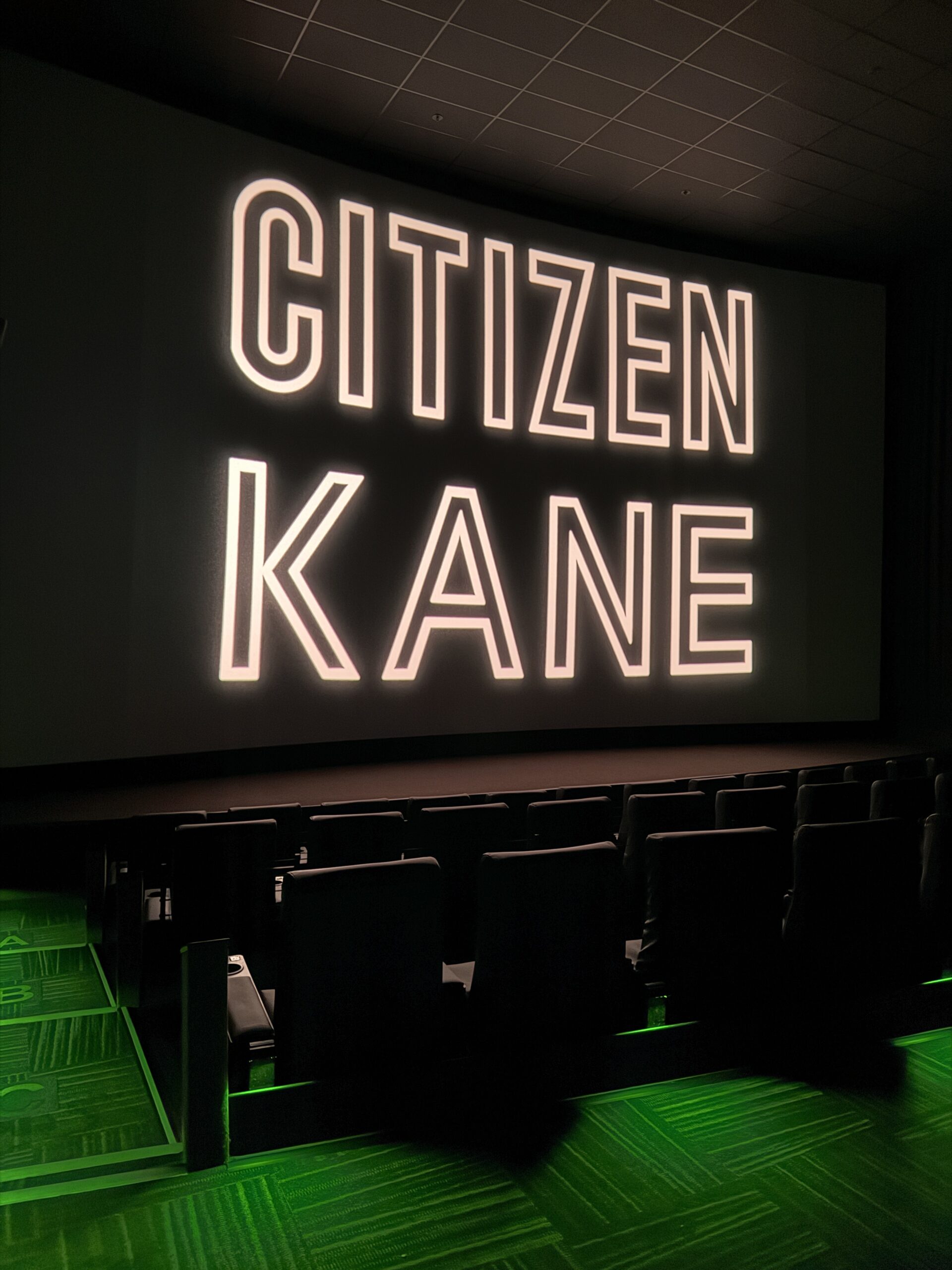
Such questions stayed with me this week as my son Truman and I went to see Citizen Kane on the big screen for its eighty-fifth anniversary. Film buffs regard this 1941 film with a respect bordering on awe, perhaps wishing that contemporary films were as artful and substantive. Thousands of movies have been released since the Orson Welles masterpiece, but most have faded from memory.
Yet Citizen Kane still attracts viewers, including me. My father was a film critic, actor, and director, and I grew up hearing him lecture about Orson Welles’s masterpiece. I’ve now seen the film eight times, and every viewing reminds me of those conversations, just as Citizen Kane itself reminds us of the importance of simple and abiding memories.
As I summon up my memories of my dad introducing that film (as he did with a rented film projector at my third-grade birthday party), I realize that I miss my father’s optimism. People often remarked on my dad’s boundless cheery energy, his focus, and his readiness to engage on almost any topic. Trained as a magician, actor, and director, he approached every conversation as though he had just stepped onto a stage. If you have seen video of Orson Welles telling a story, you will see something they had in common.
In 1976, we hoped that we were putting our national darkness of Watergate and presidential corruption behind us. The celebrations were bipartisan, joyous, and widespread. I remember our parking near the Martin Luther King Memorial Library and then walking the mile or so to see the enormous crowds on the National Mall. I remember the patriotic bunting on the streetlights, the parade, the Smithsonian’s Bicentennial exhibits, the excitement surrounding the newly opened Air and Space Museum, and finally the fireworks exploding above the Washington Monument.
My mother worked as a librarian, and my father reviewed theater and film for WTOP (today’s WUSA) television. Books filled our house, the Post always lay open on the table, and the evening news presented my dad and his on-air colleagues. I wore Bicentennial buttons, completed Bicentennial school projects, and posted commemorative posters in my room. By the summer of 1976, I had thoroughly caught Bicentennial fever.
The Bicentennial and Citizen Kane have endured for the same reason: each offers a fixed point in a culture that feels constantly in motion.
This week I sat beside Truman watching the same film that my father taught me to love, realizing that enduring memories can be gifts that one generation passes to the next.
Time filters our memories. We forget most movies, perhaps thankfully, and remember the masterpieces. We forget most public celebrations and remember the ones that endure. The past often appears richer than the present because time has already performed the work of selection.
We should devote as much attention to creating memorable experiences as we devote to admiring the memorable achievements of others. We might ask what we are creating today that people will still celebrate fifty years from now. What films from our era (such as Sinners, Oppenheimer, or The Odyssey) will we care about in 2076? Which of today’s most-discussed books will still be read or taught? What stories about acts of public generosity, civic imagination, or artistic courage will still be remembered when today’s obsessions with malfeasance and buffoonery have been forgotten?
Perhaps if we can identify and celebrate what gave the Bicentennial its spirit or Citizen Kane its staying power, we can then cultivate those same qualities in our own communities, classrooms, neighborhoods, and creative work.
Few of us will create works that people admire eighty-five years from now or organize celebrations remembered half a century later; we need not construct our own Xanadus. Instead, we can all enrich another person’s memories. A teacher may inspire a student, a mother’s encouragement may stay with her son for decades, or a neighbor may establish a local tradition that others carry forward. We seldom recognize those moments while we are living them, but we can recognize them with hindsight.
As we reflect on the people and country we love, we should strive to fill our days with words and actions worthy of being remembered.
I look forward to seeing you and being seen tonight. I have yet another outrageous black shirt that should keep me cool as I pace and perplex. I look forward to seeing you and your teams this evening. Join us on the patio if you can get a reservation or arrive early enough. As for the quiz, expect 31 questions on a variety of topics you should know something about, this week with questions on spices.
In addition to topics raised above and below, expect questions tonight on the following: Actresses, animation, anniversaries, apartments, apostles, authors, awards, basketball, bears, billionaires, board games, box office, broadcasters, buoyancy, businesses, carriers, chart-topping songs, chemistry, classic Hollywood, compounds, cooking, crystals, documentaries, epics, flowers, forests, forests, geography, islands, losing streaks, lyrics, mammals, marsupials, memories, minerals, musicals, obligations, oceans, olives, rankings, satires, seasonings, skyscrapers, streaming services, studios, suspects, television history, vocabulary, westerns, wildlife., current events, and Shakespeare.
For more Pub Quiz fun, please subscribe via Patreon at https://www.patreon.com/c/yourquizmaster.
Thanks to all the new players joining us at the live quizzes and to all the patrons who have been enjoying fresh Pub Quiz content. Certain friends have upgraded their memberships recently, which I really appreciate.
We are now past 100 Patreon members, including people who have upgraded their paid memberships! You know who you are, and I salute you! I also incidentally salute Cathy, Christine, Bobby, Esther, James, Damian, Jim, and Meebles! Thanks also to new subscribers Prescott, Bill and Diane, Tamara, Megan, Michael, Janet, Jasmine, Joey, Carly, The X-Ennial Falcons, and The Nevergiveruppers! Every week I check the Patreon to see if there is someone new to thank. Maybe next week it will be you! I also thank The Original Vincibles, Summer Brains, Still Here for the Shakesbeer, The Outside Agitators, John Poirier’s team Quizimodo, Gena Harper, the conversationally entertaining dinner companions and bakers of marvelous and healthy treats, The Mavens. Hello to Bill and to Jude’s dad. Thanks in particular to my paid subscribers on Substack. Thanks to everyone who supports the Pub Quiz on Patreon. I would love to add your name or that of your team to the list of pub quiz boosters. Also, I sometimes remember to add an extra hint on Patreon. I appreciate your backing this pub quiz project of mine!
Best,
Dr. Andy
Three questions from last week:
- Unusual Words. What four-letter P verb means to trim or reduce something?
- Cars. According to J.D. Power and Associates, what is the most reliable car brand of 2026? It has five letters in its name and is not Honda.
- Pop Culture – Television. Who had the title role in the Emmy-winning dramedy Nurse Jackie (2009–2015)?